April 7, 2026
Case study: relieving chronic sciatica with TCM in Paris
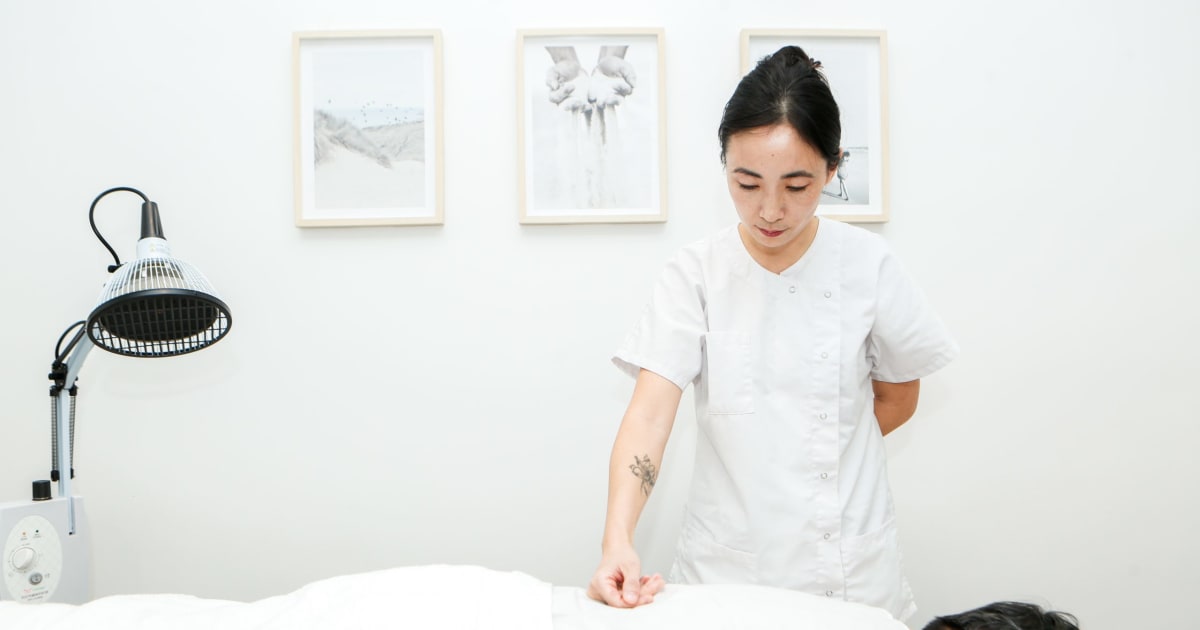
Sciatica that resisted conventional treatment
In my Paris practice in the 4th arrondissement, I regularly support patients with chronic pain that resists conventional approaches. Today I’d like to share the case of a patient whose recovery perfectly illustrates what Traditional Chinese Medicine can do.
The patient’s profile
This 45-year-old woman, a finance executive, had been suffering from right-side sciatica for three months. Despite two physical therapy sessions per week, no lasting improvement was taking shape. Her stooped gait reflected the intensity of her pain.
Diagnosis according to Traditional Chinese Medicine
As a practitioner certified by IMTC France, with training enriched by my hospital residencies in China, I approach every case with a holistic view of the patient.
The telling signs
The traditional Chinese examination revealed:
- Pale tongue with white coating: a sign of Qi deficiency and dampness
- Tense pulse on the right side, particularly at the Liver meridian position
These elements pointed me to a precise diagnosis: Liver Qi stagnation combined with a blockage of the Bladder meridian.
First session: immediate release
My therapeutic strategy drew on three complementary techniques from my training in Chinese manual medicine:
Techniques used
Deep Tui Na on the lower back and piriformis muscle, a technique I refined within the Master Cao Guohua lineage.
Targeted acupressure on strategic points:
- GB30 (Huantiao): master point of the hip
- GB34 (Yanglingquan): regulation of the tendons
- BL40 (Weizhong): dispersion of pain
- BL60 (Kunlun): harmonization of the Bladder meridian
Sliding cupping along the Bladder meridian to restart energy circulation.
Immediate result: the patient walked out standing straight — the difference was striking.
Second session: treating the root cause
One week later, she showed 60% improvement. This session allowed me to deepen the analysis of her case.
The impact of work-related stress
Her profile as an executive under pressure led me to explore a crucial angle: the impact of chronic stress on posture. Stress compresses the diaphragm, which in turn pulls on the lumbar region.
I therefore focused this session on abdominal work, releasing the visceral tensions that were maintaining the postural imbalance.
Third session: transition to prevention
The transformation was remarkable: near-complete disappearance of the pain. This session marked the shift from curative treatment to preventive follow-up.
The patient now benefits from monthly preventive follow-up — a perfect illustration of the TCM philosophy: rebalance the whole to prevent recurrence.
Why does this approach work?
A holistic view of the patient
Unlike symptomatic approaches, TCM considers the human being as a whole. My comprehensive training — triple certification in Acupuncture, Tui Na, and Chinese Herbal Medicine — allows me to tailor techniques precisely to each case.
Complementarity of methods
The effectiveness comes from the synergy between the different techniques: therapeutic massage, acupressure, and cupping work together to maximize results.
Treating root causes
Rather than masking symptoms, I identify and treat the energetic imbalances at the root of the pain.
Suffering from chronic pain?
This success story reflects the effectiveness of traditional Chinese techniques in supporting pain that resists conventional treatments.
In my practice at 6 rue des Lions Saint-Paul (Paris 4), open 7 days a week, I apply these centuries-old methods with the rigor of Chinese hospital training.
If you suffer from sciatica, lower back pain, or other chronic pain, feel free to book a session to explore a different and proven approach together.
Want to learn more or book a session?
Book a session