By Lijuan Huang
Before I Insert a Needle, I Take Time to Search
Lijuan Huang’s Chinese medicine notebook, part 2 — every needle has its place and its reason.
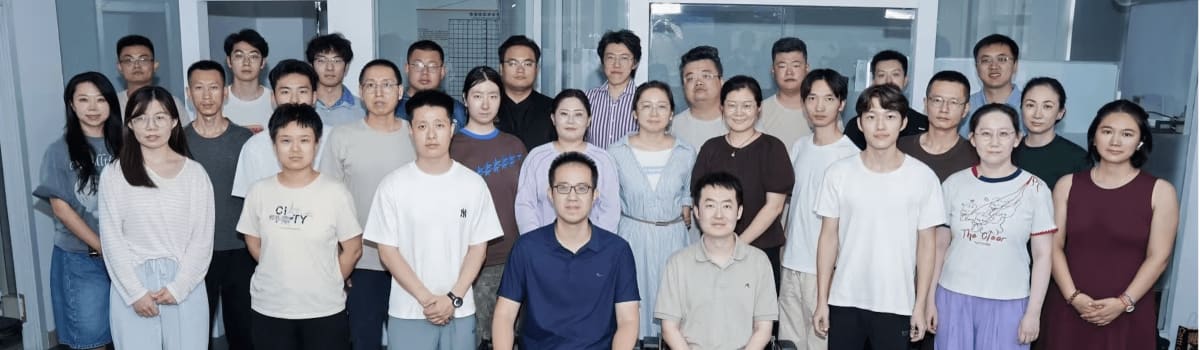
During another training in Jinan, China, I came back to pulse diagnosis. This time it was closely tied to acupuncture: the teacher took the pulse before inserting the needles, and then once again afterwards.
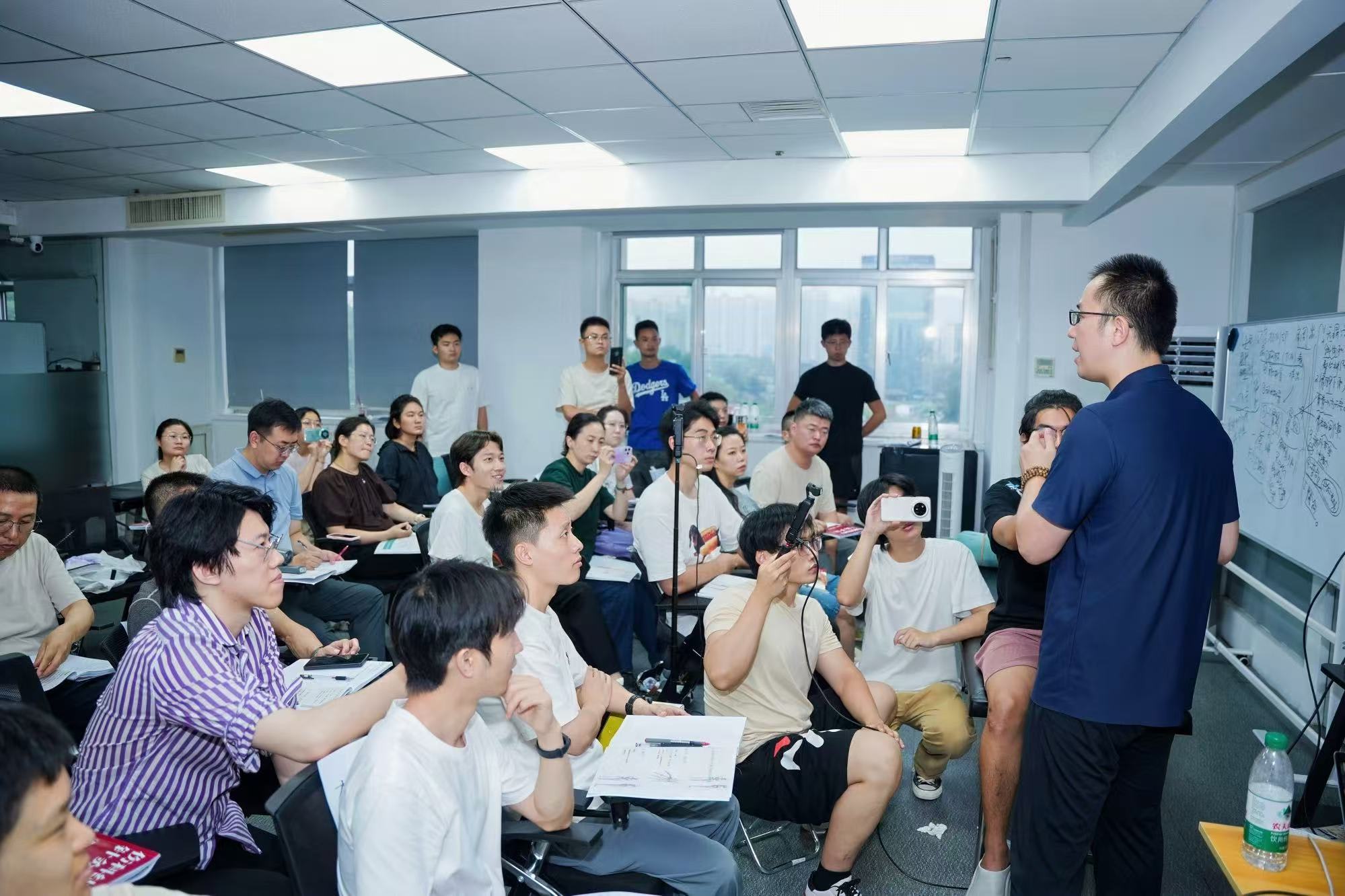
Theoretical course of acupuncture improvement in Jinan
The pulse as a point of observation during treatment
I already knew how to take the pulse. What interested me this time was that the pulse can also become a point of observation during treatment, especially in the external therapies of Chinese medicine: first understanding the person’s state, deciding how to conduct the session, and then observing what has changed afterwards.
Now, in my practice, I take the pulse while we talk. When the person lies down on the treatment table, before the needles go in, I take it again. At the end, I observe once more.
I am not only looking for where it hurts. I also pay attention to the person’s overall state and to how the body responds. For example, if someone looks very tired, I will arrange the session differently from how I would for someone full of energy.
Finding the points, not just remembering their names
Books mark where the points are. But in front of a real person, I cannot stop at a point chart.
I palpate, compare both sides of the body, and look for sensitive areas, tense tissue and differences I can feel under my fingers. Depending on the methods I have studied, the points I finally choose are sometimes far from where the pain is.
This is often what surprises people most: someone tells me her head is uncomfortable, and I may start by examining her feet or hands.
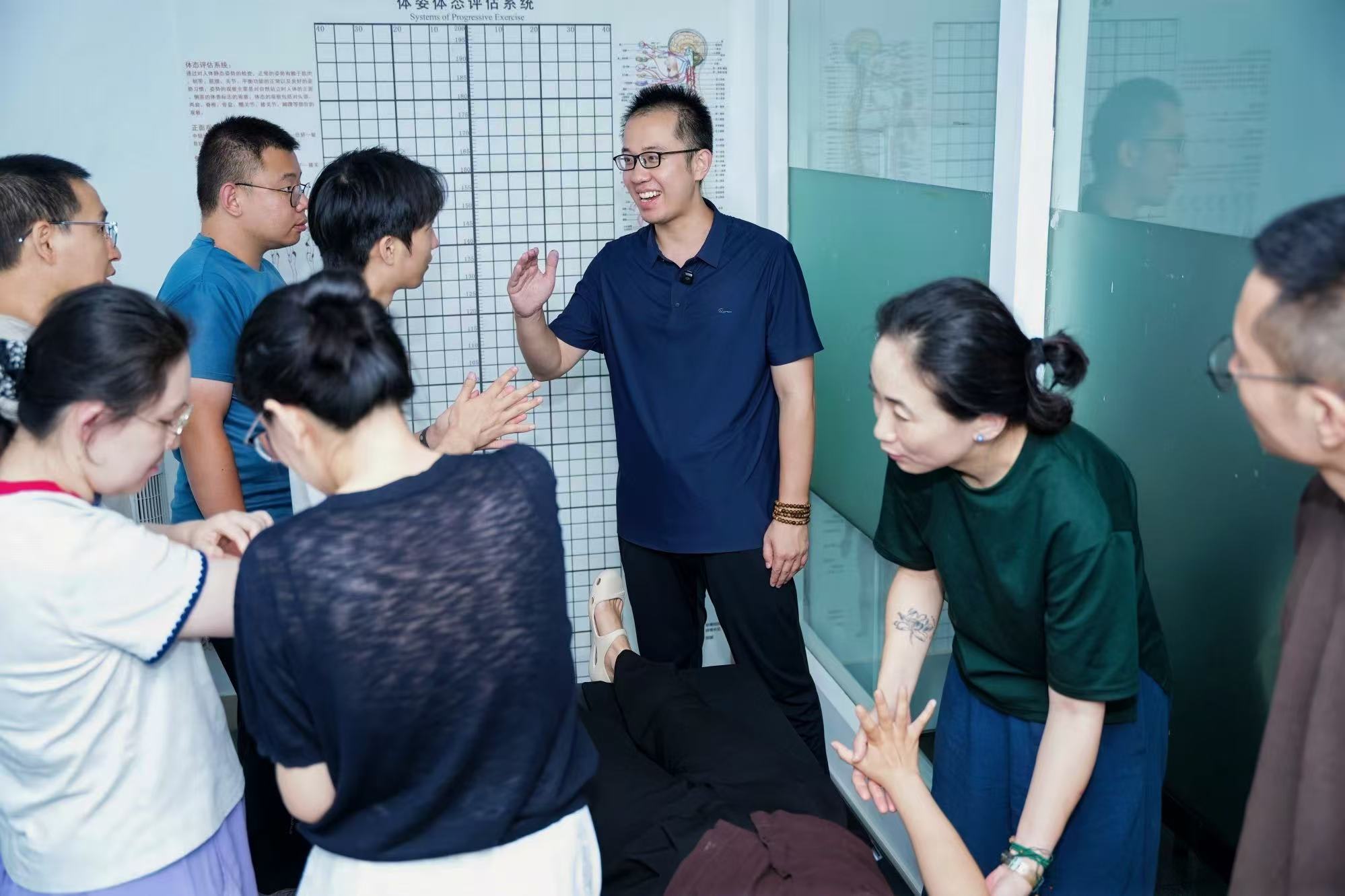
With the professor - Lijuan (in green)
Every needle should have its place and its reason
The way I think about the number of needles has also changed. I ask myself: can I use a few fewer while keeping a consistent treatment logic?
This does not mean that fewer needles are always better. It means that every needle should have its place and its reason. The hands are sensitive, so I may choose a shorter needle there; on another area, or with a different body type, my choice changes. Needle length, gauge and depth of insertion are decisions made in front of a specific person, not simply copied from a book.
Electroacupuncture, tried on myself first
I have also learned to use an electroacupuncture device in certain situations, applying mild electrical stimulation to some of the needles. I do not connect every point; usually I choose only two to four.
I tried it on myself first. It is a habit of mine: when I learn a new procedure, I want to know what it feels like before offering it to someone else.
Depending on the situation, I also use other methods such as cupping or ear acupuncture. I am not attached to a single technique.
Learning, returning, asking again
I travel to China to train, but my learning does not happen only on those trips.
I have also studied sports acupuncture with a Canadian teacher. Her method made me rethink how I choose points, especially when the place where the person feels discomfort is far from the area my palpation focuses on.
I also reread classical medical texts. Sometimes, reading the same passage again, I discover what I had not understood the first time.
I also exchange ideas with colleagues in China. When a case raises questions for me, I can consult a teacher in Switzerland, whose advice takes into account the realities of practising in Europe.
I like this way of passing knowledge on. We keep learning on the foundation of the work of those who came before us. Then practice lets us examine our own understanding, before going back to the books or asking new questions.
A training is not the moment I stop searching. Very often, it is precisely what shows me what I still need to understand.
Want to learn more or book a session?
Book a session